Xero | Reporting Modernisation
In the final year before Xero’s legacy reports were switched off, the challenge was to guide millions of customers through change while preserving trust, improving usability, and moving them to a more flexible modern framework.
- 120+ improvements
- 7M favourites repointed
- 4M sessions moved
- 17.8M reports run in week one
Role: Senior Product Designer
Skills: Product design, UX, discovery, research, interaction design, prototyping, usability testing, accessibility, systems thinking
Company: Xero
Overview
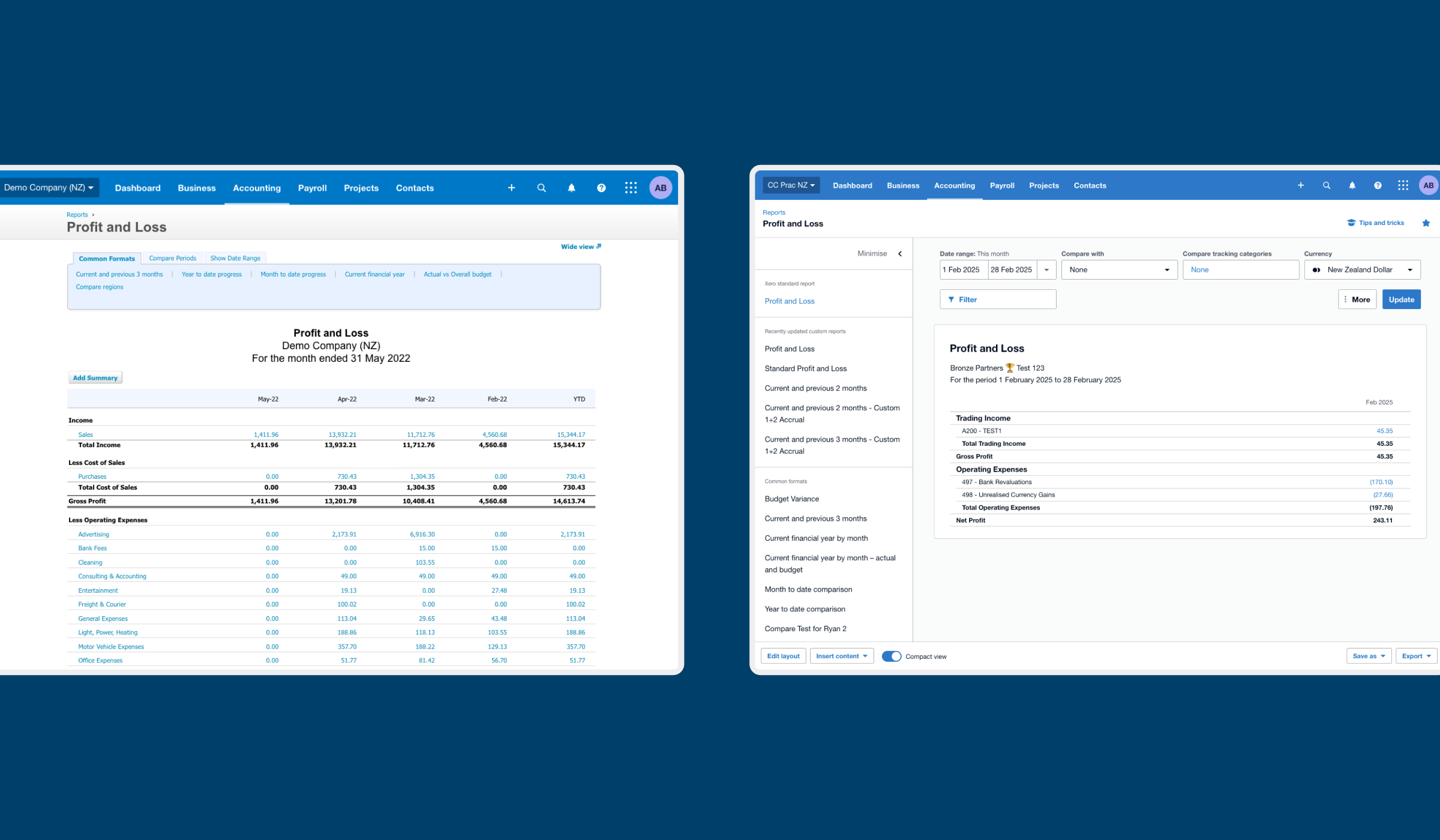
At Xero, I led design across the modernisation of Reporting, helping guide the transition from the legacy V1 reporting experience to the more scalable V2 platform within one of Xero’s most-used and most business-critical product areas. The challenge was to support a major product shift for customers who depended on reporting daily, while ensuring the move felt trustworthy, clear, and low-friction.
This was far more than a migration. Through research, systems thinking, interaction design, and close cross-functional collaboration, I helped drive work across feature parity, new capability, and migration experience design. The goal was to create a reporting system that not only resolved the limitations of V1, but also felt more consistent, scalable, and aligned with Xero’s wider product ecosystem.
The outcome was a successful transition to a stronger long-term platform, enabling Xero to retire V1 with minimal disruption, support customers through change, and establish a more modern foundation for the future of Reporting.
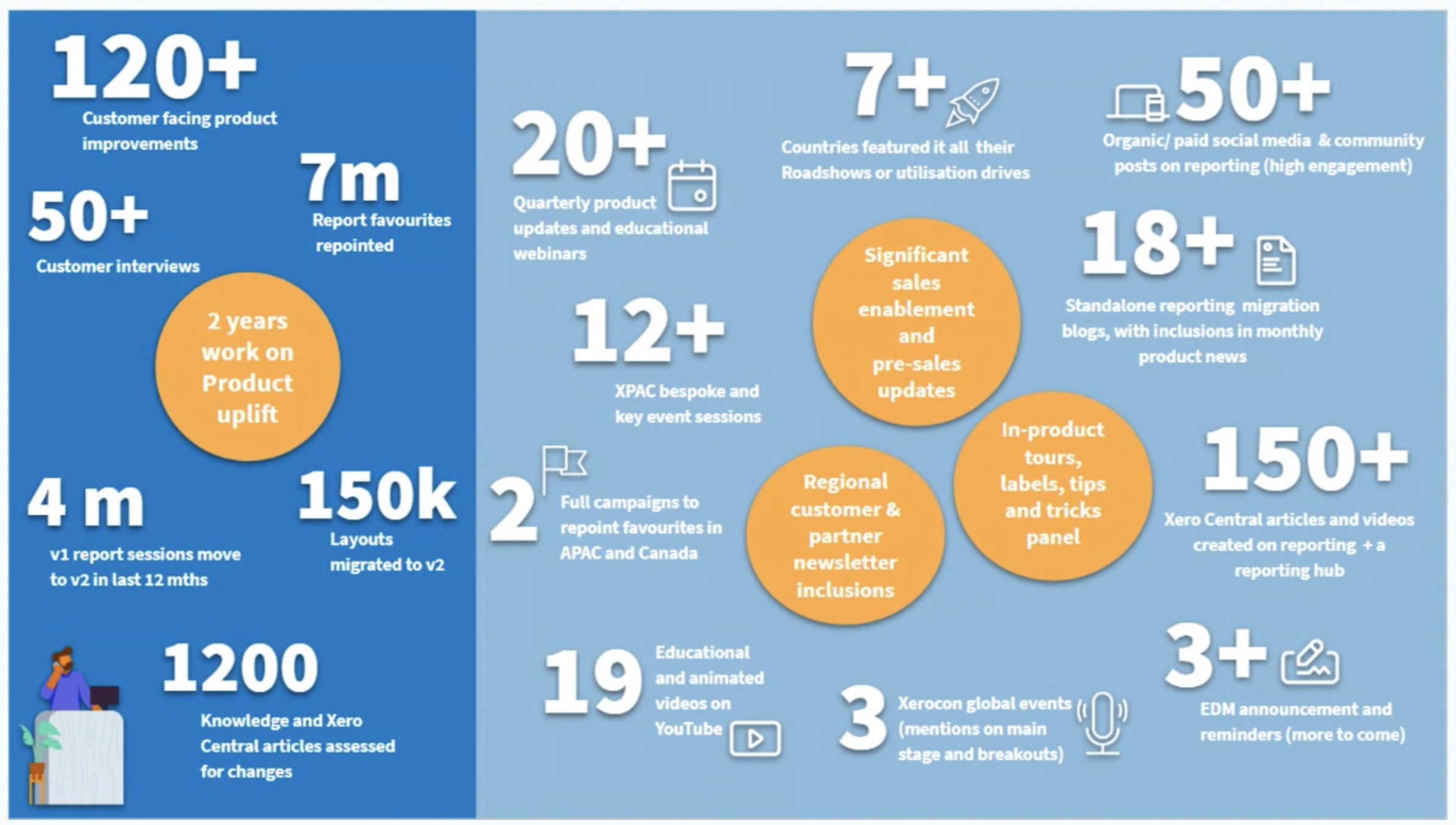 120+ customer focused improvements, 50+ research interviews, repointed 7 M favourites and migrated 4 M sessions, enabling an intuitive reporting product that solved complex tasks and boosted customer productivity.
At its core, the design problem was one of scale and trust: how to evolve a business-critical product, meet deeply embedded customer expectations, and design a transition that not only reduced disruption, but rebuilt confidence in Xero’s modern reporting experience.
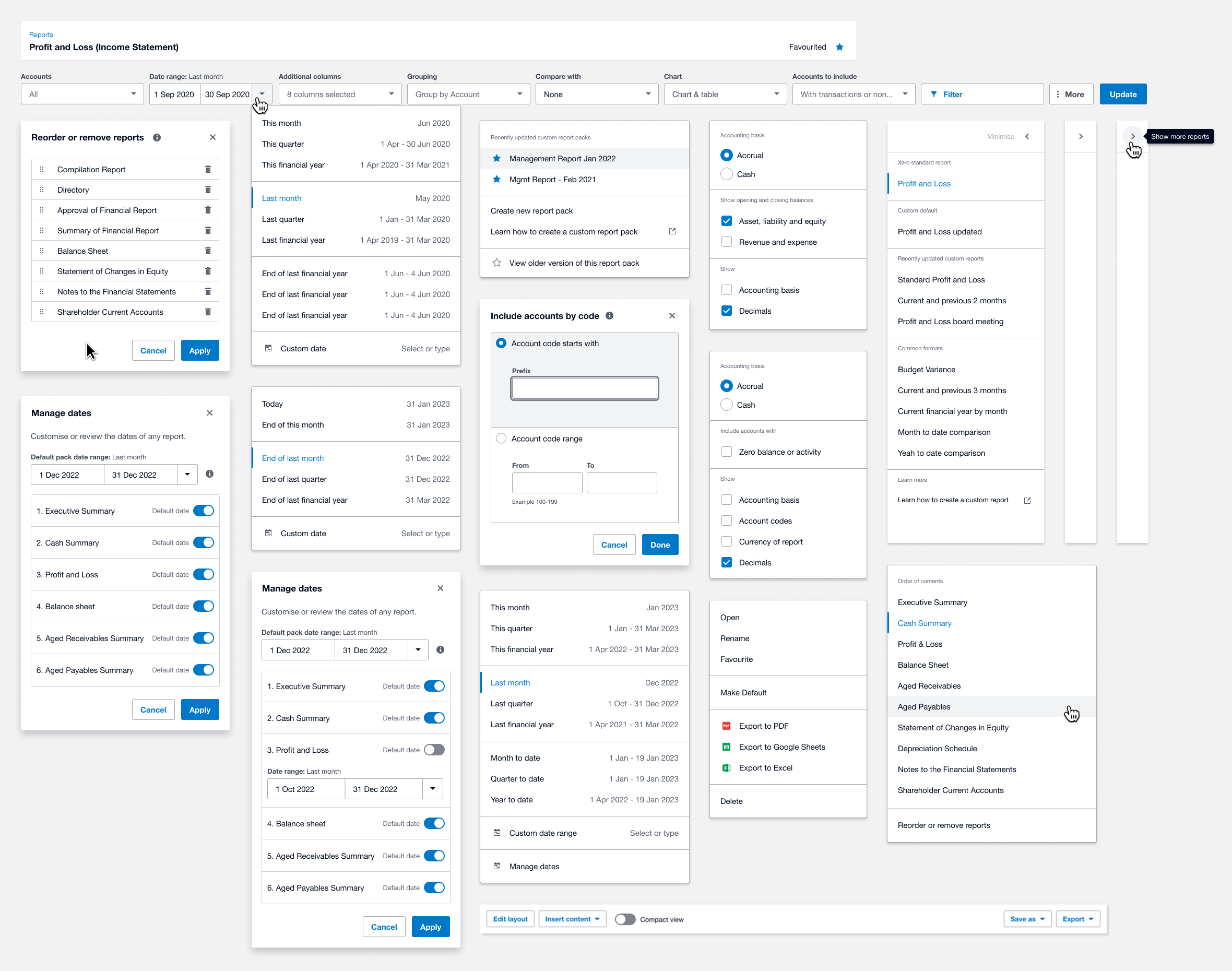
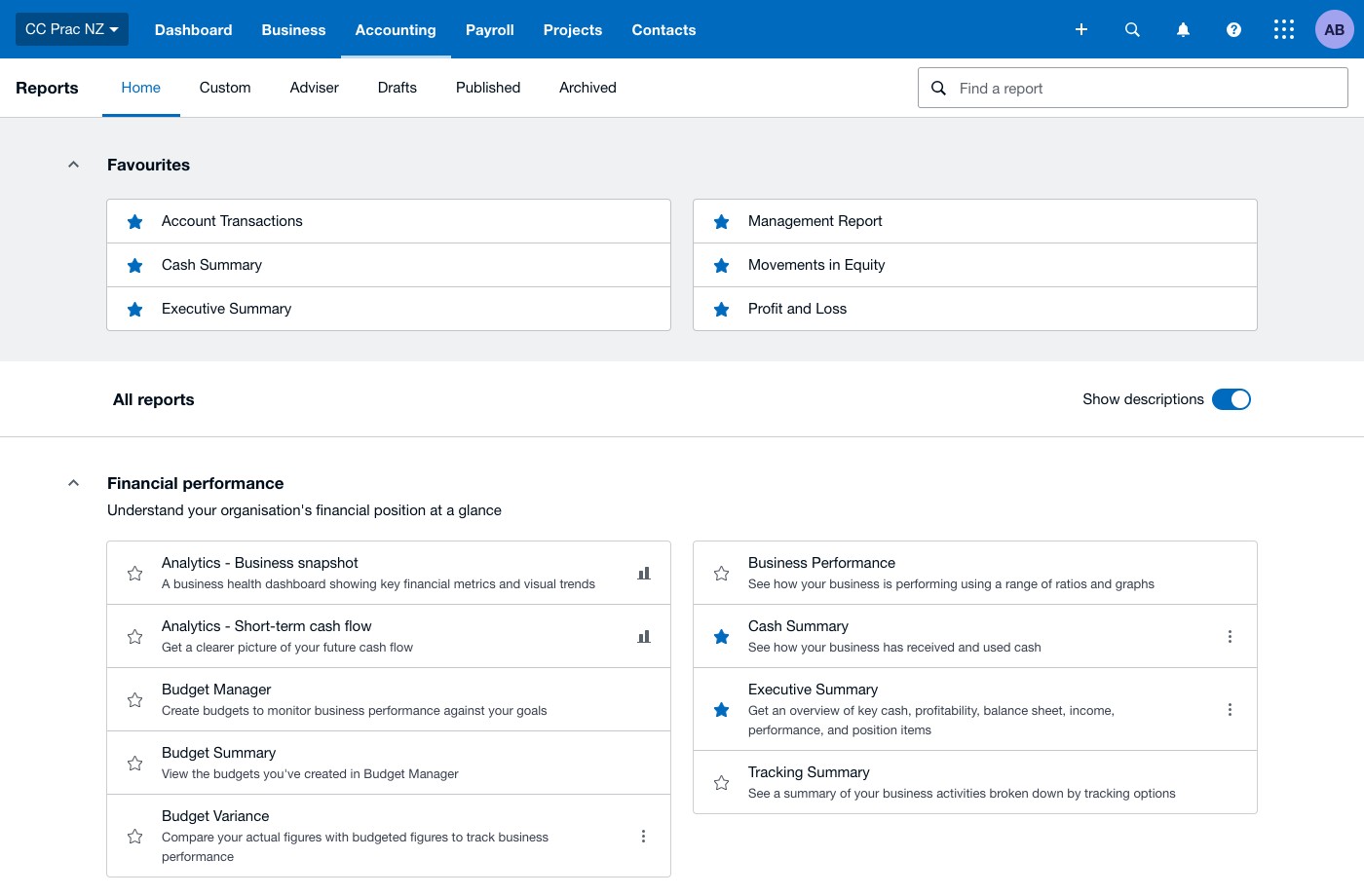 The Reports home organises reports into clear categories, with optional descriptions to help small business owners choose the right report, and favourites that make frequent reports faster to access.
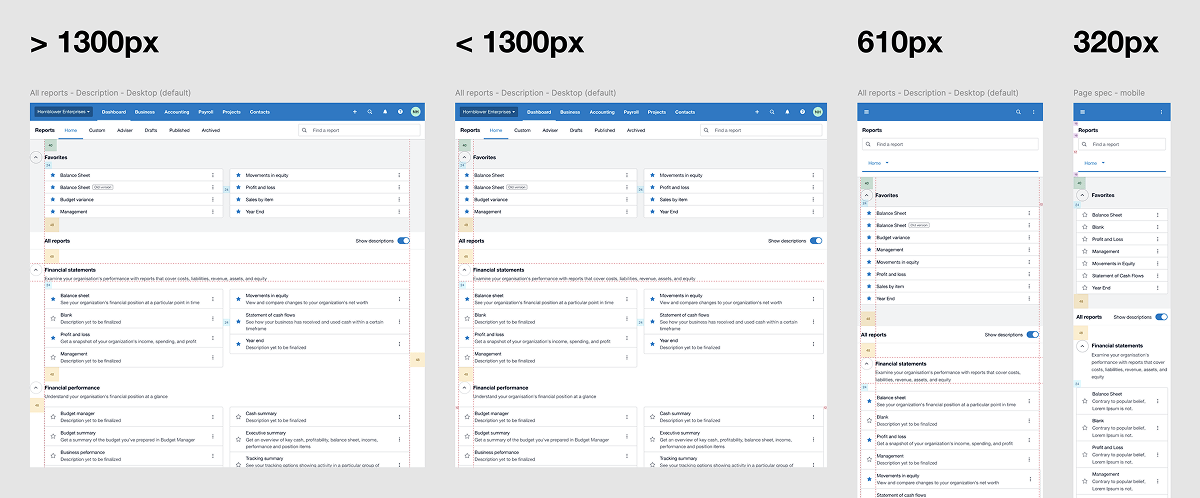 Reports home combines clear report categories, optional descriptions, and favourites, with a responsive UI that adapts spacing and layout across screen sizes to keep report browsing clear and easy to use.
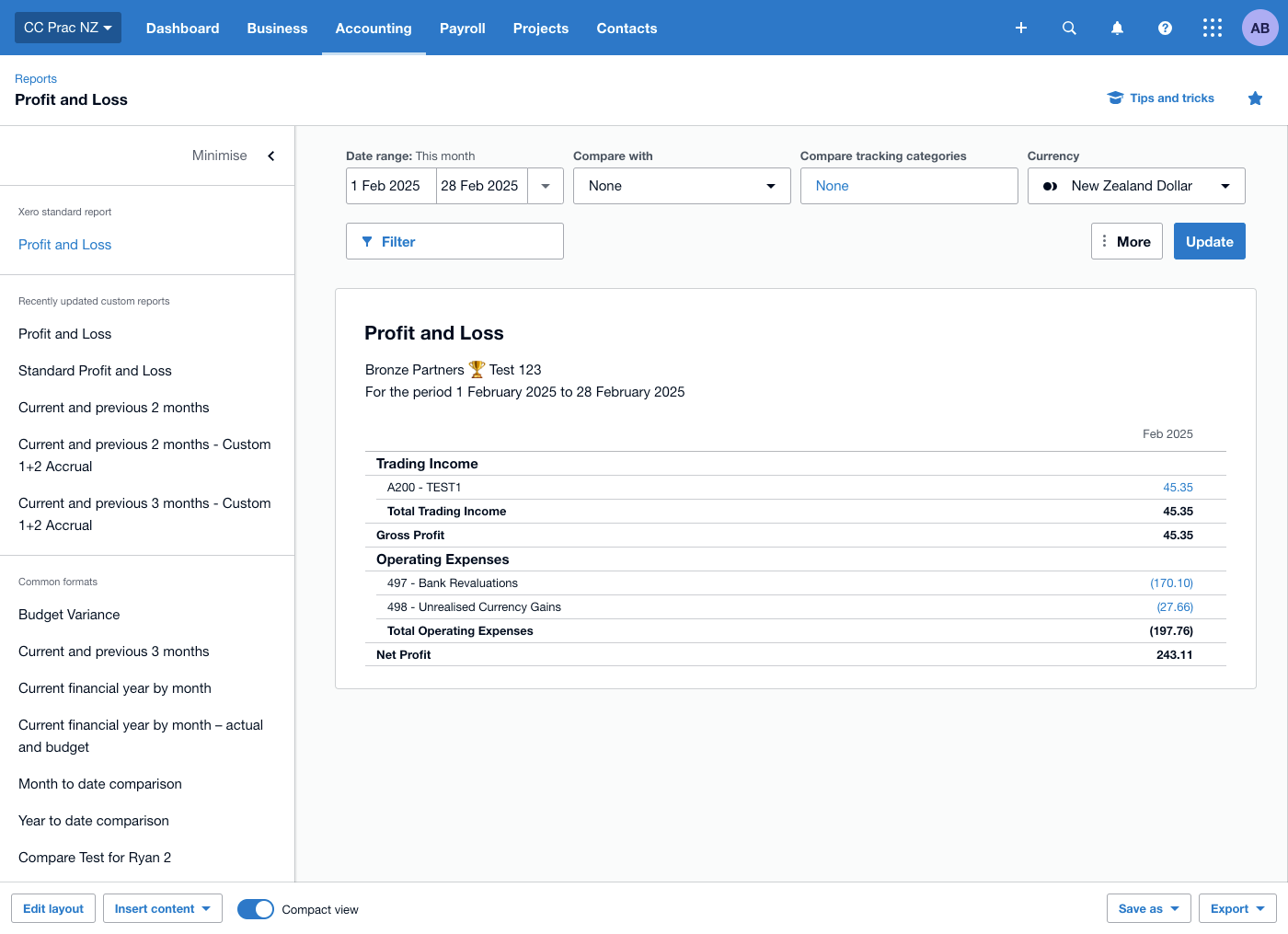 Popular reports like Profit and Loss bring together smart defaults, intuitive settings, and common preset formats, helping small business owners review performance quickly in the layout that best fits their needs.
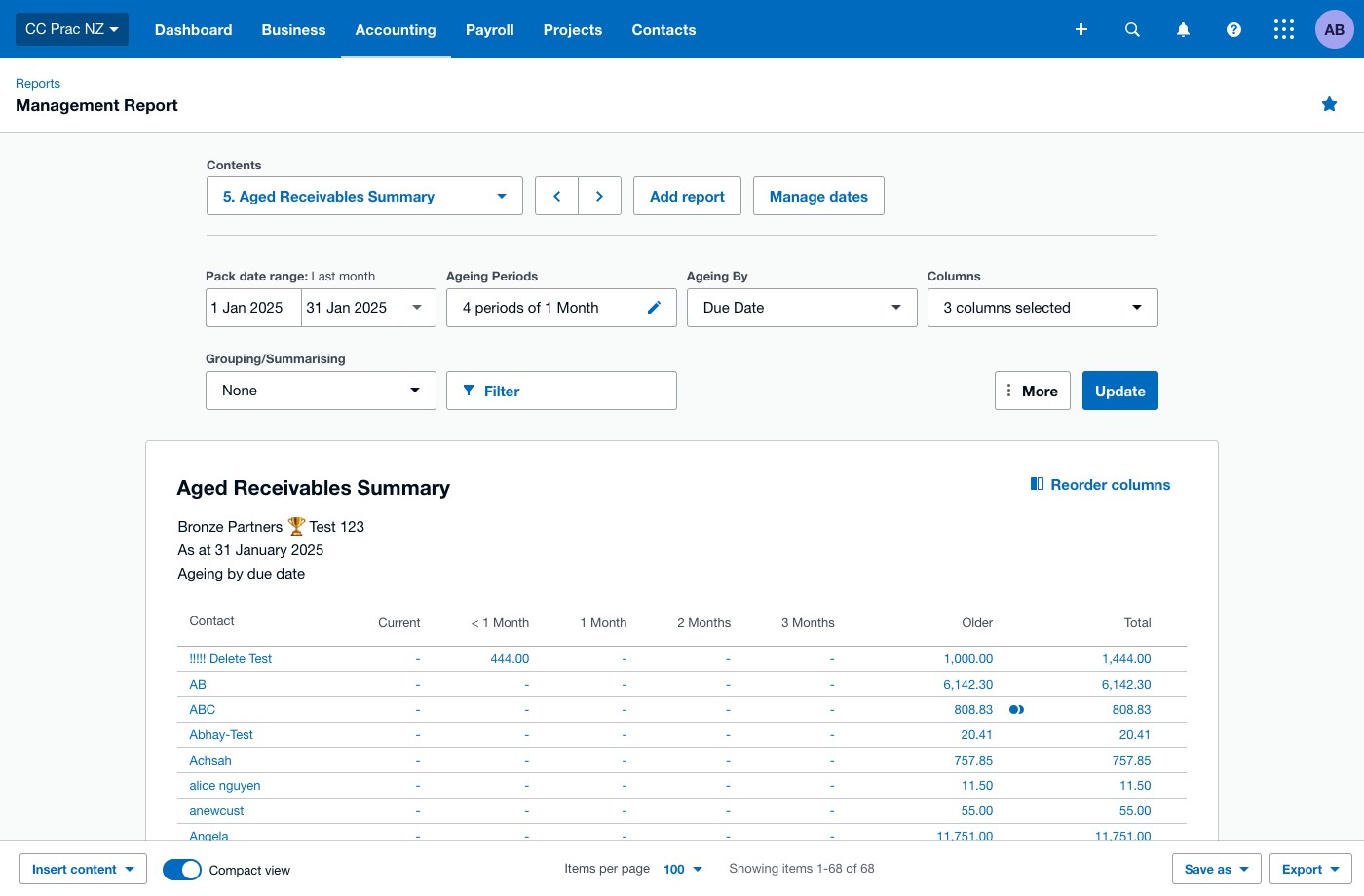 Management Report combines key reports into one flexible pack, with notes, presentation controls, and Manage dates, making it easier for small business owners to review performance, customise what they share, and present a clearer picture of the business.
Key design contributions
- Reporting charting framework and generative AI research
- Modernising the Reporting framework, accessible enhancements, greater flexibility and control
- Generative AI across Reporting and Insights design and research projects
- Participated in multiple Xero hackathons that solved key Xero feature requests for Reporting and across the product
- Reporting accessibility and supporting tools, keyboard hotkeys
- Mentored a Xero Design Grad in 2024 in Reporting and Insights team
Project Summary: V1 Exit – Xero Reporting Migration
The Problem
Xero had two reporting systems: V1 (legacy) and V2 (modernized). Maintaining both was inefficient and costly. In 2022, Xero announced the retirement of V1 reports within a year. However, many customers were unhappy with the change — preferring the familiarity and customization of V1 — and expressed strong negative feedback.
The challenge was twofold:
- Customer resistance to change due to loss of familiar features.
- Business need to deprecate V1 while ensuring customer satisfaction and seamless migration.
The Solution
The team set out to:
- Ensure feature parity between V1 and V2.
- Release new capabilities to make V2 more compelling.
- Design a frictionless migration experience.
The design-led approach was central to this success:
- Worked iteratively and collaboratively across the Reporting framework and teams.
- Used rapid design loops to test, validate, and refine ideas.
- Grounded decisions in customer insights and usage patterns.
Design Impact
The process made a measurable difference:
- 120+ product improvements delivered directly from user needs.
- 7 million report favourites repointed and 4 million sessions moved to V2.
- Conducted 50+ customer interviews to shape solutions that met real user expectations.
- Assessed 1,200+ help articles to align support with the new system.
Outcomes
Despite initial resistance, the transition was smooth:
- 17.8 million reports run in the first week after V1 shutdown.
- 91 sentiment feedback items only — within normal support levels.
- Daily usage by 267k organisations, showing adoption and trust.
Conclusion
The V1 Exit project turned a major customer pain point into a successful transition, thanks in large part to the adaptive, research-led design process. We helped transform customer resistance into acceptance by deeply understanding their needs and delivering a solution that exceeded expectations.
Other projects
I worked on a wide range of digital projects that included B2C and B2B applications across web and native app platforms. I was involved in all levels of product design and development from research to implementation.
Responsible for UX, Product and UI design, including improvements on existing applications and new product development. Assisting in gathering requirements to adapt products from legacy systems into the new framework and design rationale.